
Heatwave and windy July highlight the importance of wind energy for electricity supply
Persistent drought and low water levels in many European rivers are also affecting energy supply. Austria’s run-of-river hydropower plants are currently producing almost one third less electricity than in July of last year. While low river flows are significantly reducing output from run-of-river plants, thermal power plants are also reaching their limits.
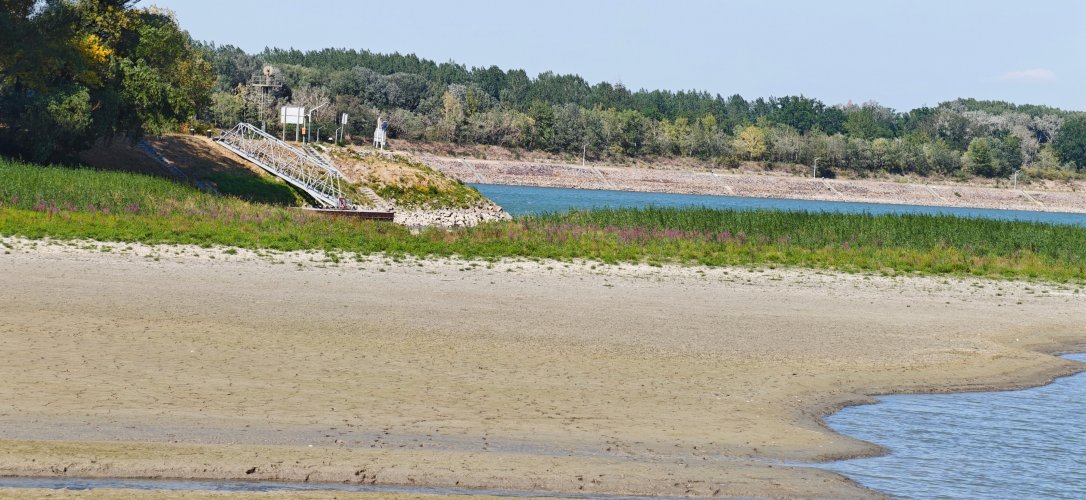
The Greifenstein run-of-river power plant in Lower Austria is also showing an extremely low water level – (c) Irene Harauer
The situation is particularly dramatic in Hungary, where the Paks nuclear power plant has already had to reduce its output due to the high temperature of the Danube water. A complete shutdown of the reactors is being discussed, but this would pose enormous challenges for the country, as the plant covers around half of Hungary’s electricity demand.
While drought is putting pressure on hydropower plants and cooling systems, Austria’s wind farms were able to generate more electricity than planned in many regions in July. This above-average production helps offset shortages in other forms of generation and makes the energy system more robust overall. In July, Windkraft Simonsfeld produced 54.8 million kWh of green electricity, 17% above target. Across Europe, July was also a record-breaking month for wind power.
These developments once again show how important a broadly diversified energy mix is. Current weather extremes in particular make it clear that a diversified renewable electricity supply is not only a contribution to climate protection, but also a key factor for security of supply and resilience.