
Klement: Solar Power Plant and Natural Gem
Installation work on our solar power plant in Klement, in the municipality of Ernstbrunn, is proceeding according to schedule. The modules are currently being installed, and the first kilowatt-hours of solar power are expected to be generated as early as April.
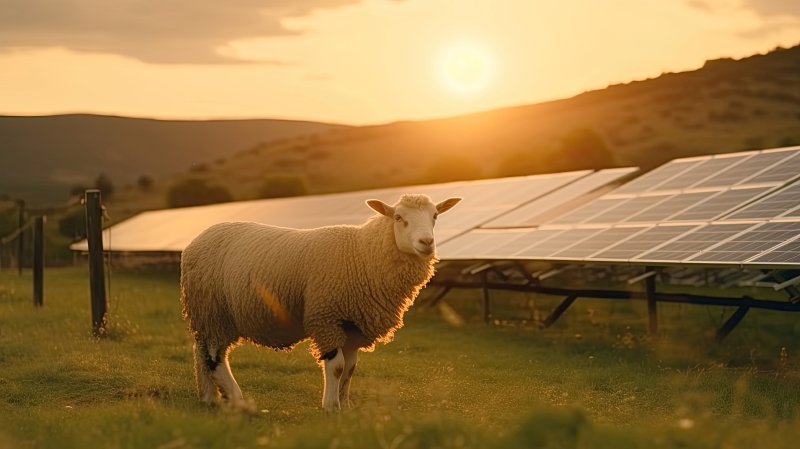
Symbolic image
Our solar power plant not only actively contributes to a clean electricity supply from domestic energy sources, but also brings an ambitious nature conservation project to life: The PV system is being built on the site of a former soil disposal site, whose green spaces will be grazed by sheep in the future. The Pannonian dry grassland on the slope will be preserved as a valuable biotope. More than seven hundred shrubs and trees have already been planted to enhance the ecological value of the area surrounding the dry grassland.
A unique solution has also been devised to enclose the former landfill site: “We are constructing a Benjes hedge, as was originally common in traditional farming practices. This type of pasture boundary consists of dead wood and hedge trimmings, which are stacked between stakes anchored in the ground and covered with willow saplings. It provides shelter for birds—such as the Spotted Flycatcher, which is rare in Austria—as well as hedgehogs and lizards; it serves as a habitat for insects and promotes biodiversity,” explains project manager Christian Harrach. Over time, shrubs and wild plants are expected to establish themselves through seeds carried in by animals—thus keeping the hedge alive.
In addition, five natural stone piles will be created to provide additional habitats for reptiles and small mammals. Sandy soil facilitates egg-laying, and stones of various sizes offer reptiles new spaces for basking and hiding. Wild bees find nesting sites in the cavities, while other insects find overwintering quarters and protection from predators. In Klement, the former excavation landfill now not only generates clean electricity but also makes a valuable contribution to biodiversity.