
TIWAG Relys on Wind Power from Windkraft Simonsfeld
By managing a total of four wind farms operated by Windkraft Simonsfeld in Lower Austria, the Tyrolean state energy utility is expanding its production portfolio and has not ruled out future participation in projects in Tyrol.
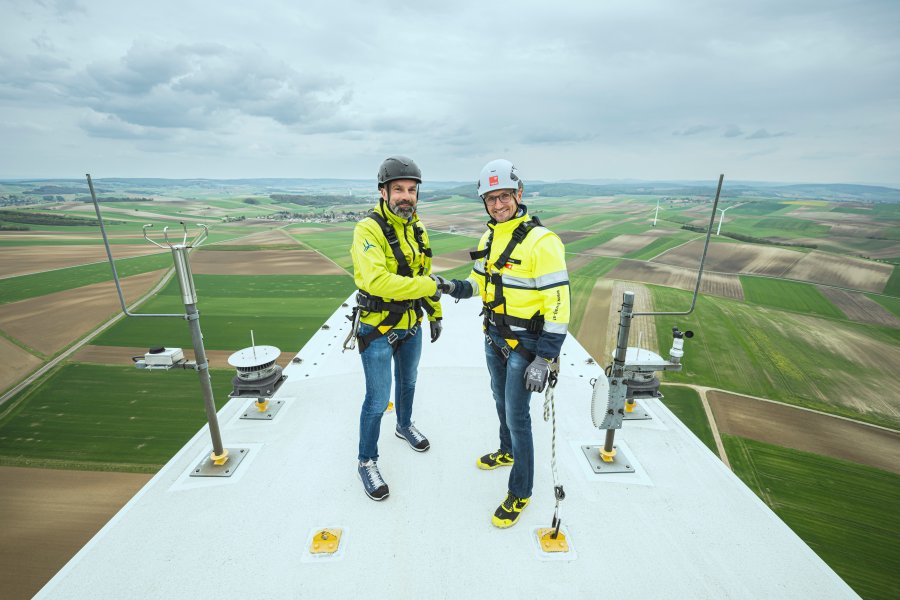
TIWAG Executive Director Michael Kraxner with Markus Winter, Chief Technology Officer of Windkraft Simonsfeld, on the nacelle roof of a wind turbine (c) Berger / Tiwag
Windkraft Simonsfeld operates a total of 94 wind farms in Austria with an annual output of 653 million kWh, making it one of the largest wind power producers in the country. Of the four wind farms agreed upon, TIWAG has initially taken over three wind farms with eleven wind turbines in the municipalities of Poysdorf, Wilfersdorf, and Hauskirchen for wind energy management. The fourth wind farm, with an additional 17 wind turbines, will follow by January 2027.
TIWAG Executive Director Michael Kraxner emphasizes: “Hydropower is the cornerstone of energy production in Tyrol. It makes sense and is important to drive forward the expansion of hydropower—especially with storage capacity—and to expand the portfolio with generation profiles that are strong in winter, such as wind power. Each region should leverage its strengths in this regard. Tyrol is ideally suited for hydropower due to its water resources and elevation differences. TIWAG has built up a century of expertise in this field. When it comes to wind power, however, collaboration with professionals makes sense, especially since TIWAG has no experience with wind power to date.”
Markus Winter, Chief Technology Officer of Windkraft Simonsfeld AG, adds: “We have already implemented similar models with other energy providers. Wind and hydropower are strong partners in the energy transition, as the seasonality of their generation ideally complements each other, and flexible storage power plants are well-suited to balancing out fluctuations in wind generation.”
Michael Kraxner therefore does not rule out further wind power projects and adds that the insights gained here can also be incorporated into potential collaborations on viable projects in Tyrol.
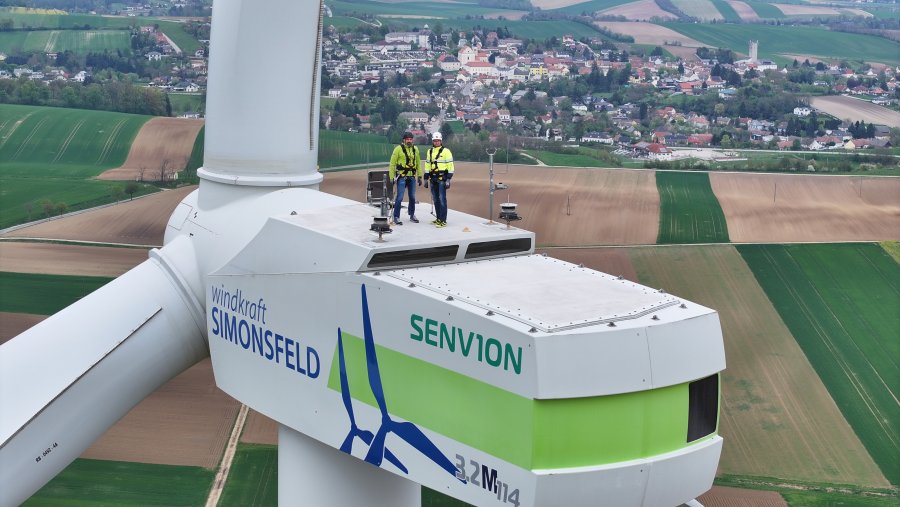
The wind turbines from Windkraft Simonsfeld in Lower Austria, which TIWAG has contractually incorporated into its energy portfolio, have a total capacity of 48 MW and a projected annual output of 120 GWh. This is enough to supply approximately 34,000 households. The electricity will be integrated into the TIWAG portfolio and will thus also be available to Tyrolean customers in the future. With this move, the state energy provider is charting a new course: “Especially in times like these, we must make even greater use of and expand our own resources. In addition to the massive expansion of hydropower and the integration of photovoltaic systems, this also includes wind power,” said Kraxner.