
Together for biodiversity: Two
successes from the March-Thaya floodplains
When collaboration works, real success stories emerge. Two current nature conservation projects in the March-Thaya floodplains show exactly that: a valuable floodplain forest will be permanently preserved as a habitat for rare birds of prey, while the corncrake population has reached a new record high.
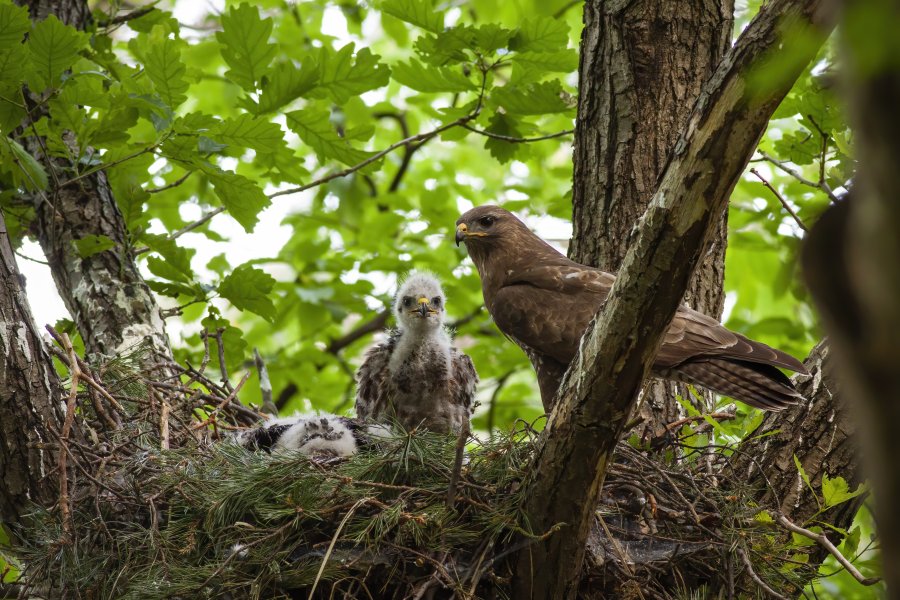
A forest for rare birds of prey
A mature forest area of around ten hectares in the March-Thaya floodplains has been secured for the long term. By leasing the area, Windkraft Simonsfeld is helping to preserve this ecologically valuable woodland, which has been taken out of forestry use and designated as a protected nesting zone.
Red kites, black kites, common buzzards and eagle owls find safe breeding grounds here. In total, up to 20 nests have been recorded, four of which are currently in use. Species protected at European level, such as the black woodpecker and the collared flycatcher, also benefit from this valuable habitat.
Biologists have been working to establish a protected nesting zone in this area since the 1990s. We are therefore especially pleased that, as part of compensation measures for our wind farms, we can now safeguard this valuable mature woodland for the long term.
A record year for the corncrake
There is also good news from the meadows of the March-Thaya floodplains, where targeted conservation measures are showing just how effective they can be. In 2025, 71 calling corncrakes were counted in the Austrian part of the March-Thaya floodplains – the highest number recorded since monitoring began in 2013. For one of Europe’s rarest meadow bird species, this is very encouraging news.
This success was made possible through close cooperation between nature conservation organisations, farmers and regional partners. Together, around 68 hectares of valuable meadows were protected. On selected areas, mowing was postponed to allow young birds to grow undisturbed.
For many years, we have supported the monitoring of corncrakes and the protection of their habitats. Particularly encouraging: in Markthof, seven corncrakes were recorded for the first time since 2013 – also thanks to newly established protected areas.
Nature conservation thrives on cooperation
Both projects show what can be achieved when nature conservation, agriculture and businesses work together. By joining forces, we create habitats where rare species once again have a future – and make an important contribution to preserving the unique natural environment of the March-Thaya floodplains.